01
KDF Filtration
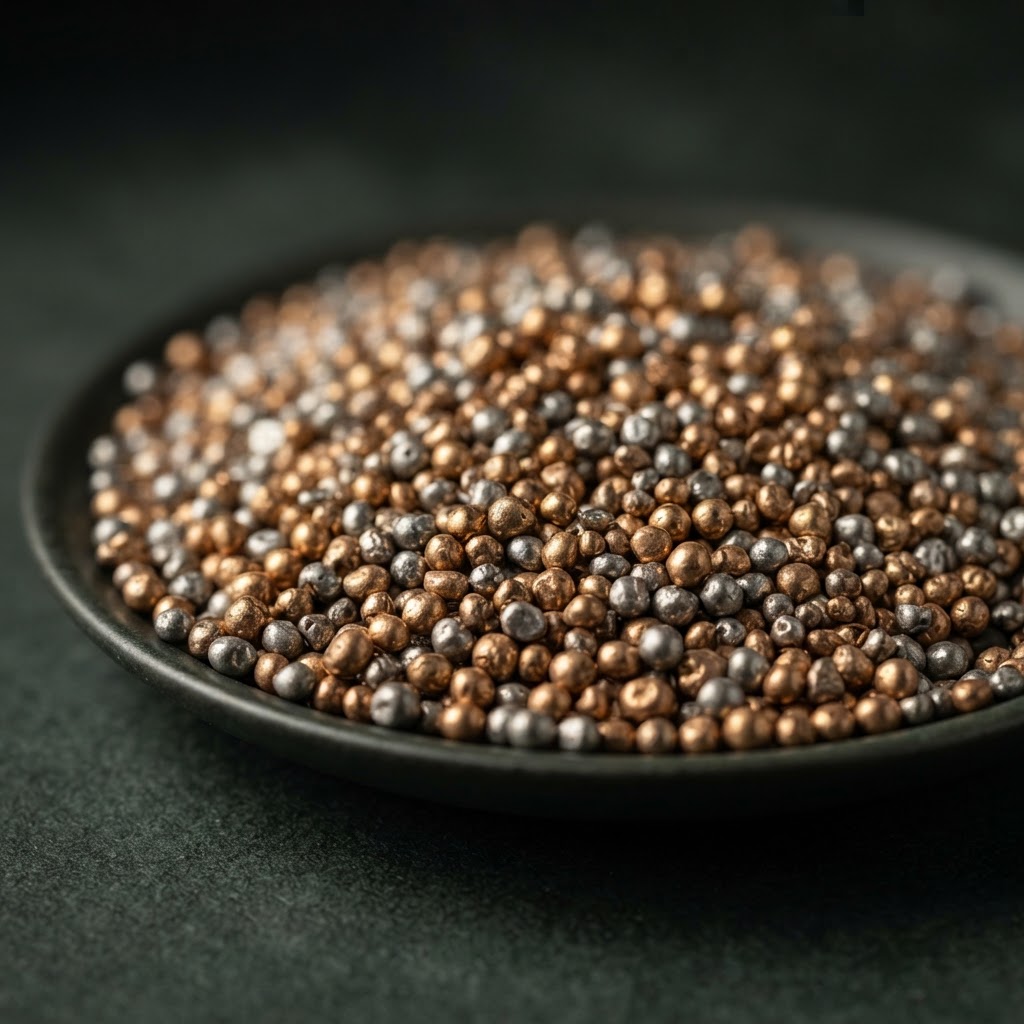
Using an oxidation-reduction process, KDF media can help reduce free chlorine and certain dissolved metals under appropriate conditions.
The Science
What shower filtration can and cannot do, the materials it depends on, and the evidence we are willing to stand behind.
The material guide below is general filtration education. It describes a proposed configuration and is not a verified specification of the final Splash cartridge.
Filtration Philosophy
True filtration performance isn’t measured by how many stages a filter claims to have. It’s determined by the materials inside, how they work together, and the results they can demonstrate.
Using an oxidation-reduction process, KDF media can help reduce free chlorine and certain dissolved metals under appropriate conditions.

Specialized media can help limit mineral scale formation, reducing the tendency of certain minerals to form deposits. Scale control is not the same as water softening.

Carbon fiber provides an adsorptive filtration structure that can reduce free chlorine and certain organic compounds, depending on the cartridge design and operating conditions.
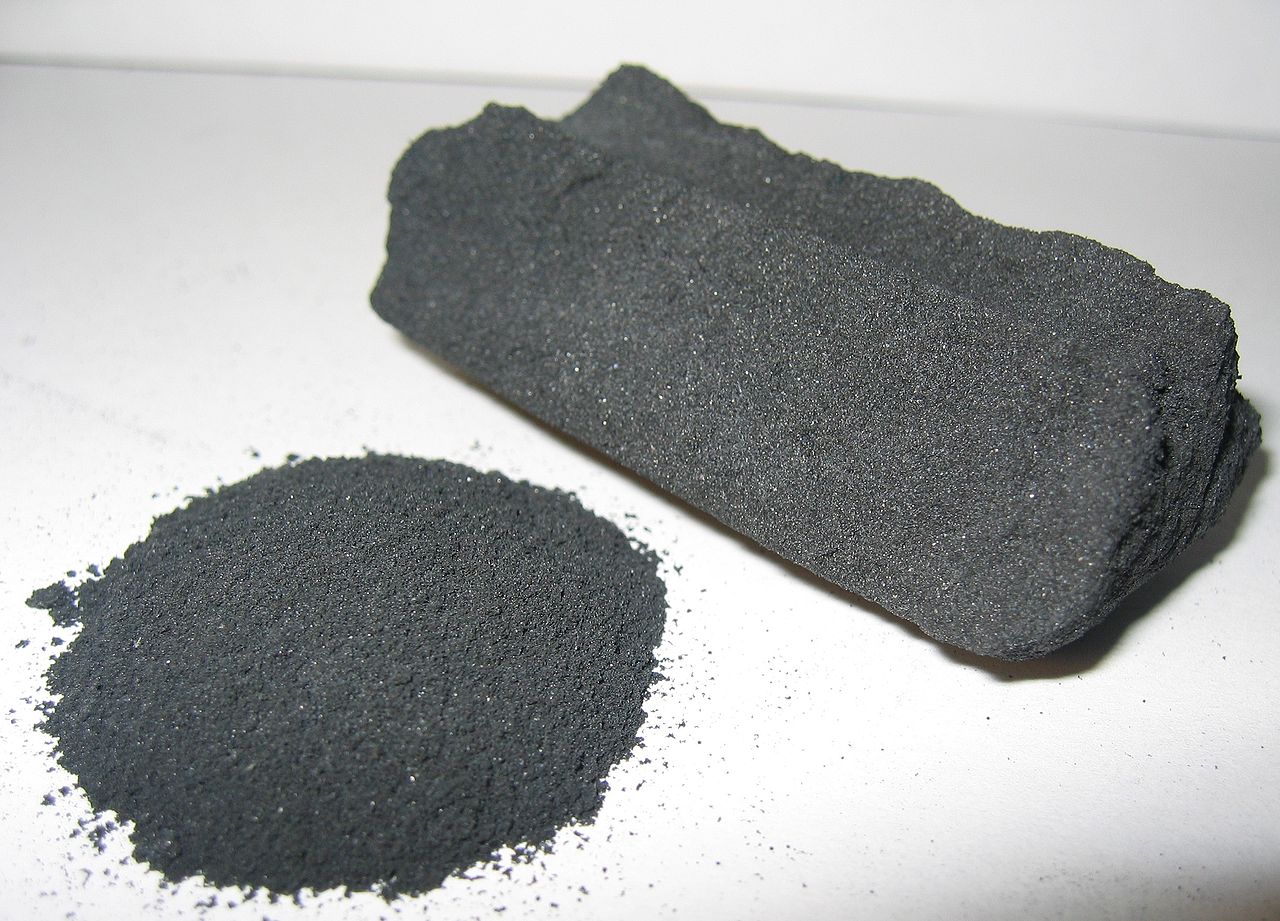 Photograph of activated carbon by Ravedave, CC BY 2.5, via Wikimedia Commons.
Activated carbon provides a large internal surface area that can adsorb free chlorine and certain organic substances, depending on water chemistry and contact time.
These four materials describe our proposed Beyclean filtration configuration. They are an illustrative configuration pending manufacturer confirmation, not a verified specification of the final cartridge, and not a claim about the number of stages.
Stage Count
A filter advertised as having 15 or 20 stages is not necessarily more effective. Some products count individual materials or repeated media layers as separate stages.
Measured Performance
The meaningful questions are which contaminants a filter is tested to reduce, how much it reduces them, at what flow rate, and for how long.
We do not claim that Splash Hydration outperforms any other filter. Without head-to-head test results, no one can honestly make that comparison.
Thoughtfully selected filtration materials. Purpose-driven design. Performance that deserves to be measured.
Explore Our Filtration TechnologyThe Science
Your water is treated before it reaches your home. Discover what that treatment means for your daily shower.
Municipal water is disinfected to help protect public health. But the disinfectants used to treat drinking water can remain present when that water reaches your shower. A properly designed shower filter can help reduce certain substances before they reach you.
Five chapters · Each with a source you can read yourself
Regulated chlorine levels are not a health hazard. This chapter is about what reaches your shower and why, not about danger.
Water utilities add a disinfectant — usually chlorine or chloramine — to kill germs and to keep water protected as it travels through miles of pipe. Disinfection is a large part of why tap water is safe to drink.
That protection is designed to last. A small residual stays in the water all the way to your tap, so it is still present when you turn on the shower. In the United States, chlorine is regulated at a maximum residual disinfectant level of 4 mg/L, and water within those regulated limits is not considered dangerous.
Free chlorine is, by design, a reactive oxidant. It reacts with the materials it meets: organic matter in the water, pipe surfaces, and whatever it touches downstream. Some people find chlorinated water drying or irritating on skin and hair. That experience is not the same thing as a health hazard at regulated levels, and sensitivity varies from person to person.
A shower filter is not a medical device and does not make water safer to drink. What it can do is reduce free chlorine in the water that reaches your showerhead — a narrow, specific job.
01 / 03
In the stream
A disinfectant residual is still present as water leaves the pipe. Utilities keep it there on purpose so it keeps protecting the water on its way to you.
Schematic, not a measurement. It shows where each stage sits, not how much any specific cartridge removes.
No clinical study has tested our cartridge. We are not making a treatment claim, and we will not borrow one from someone else's research.
Your skin’s outermost layer, the stratum corneum, is a barrier. Lipids between the skin cells hold water in and help keep irritants out. When that barrier is intact, skin tends to feel comfortable. When lipids are depleted, it can feel tight and reactive.
Everyday washing works against that barrier a little. Hot water lifts lipids, and surfactants from soap and body wash can leave residue behind after rinsing — a mechanism that has been studied independently of what else is in the water.
Water chemistry adds another variable. In a controlled study of 80 participants, washing with harder water left significantly more surfactant on the skin, which increased water loss and caused irritation — particularly in people with atopic dermatitis who carry filaggrin mutations. The same study did not observe a clear effect from chlorine, and its authors said so plainly.
So the mechanism is published, but the product evidence does not exist yet. Splash does not claim that our filter treats eczema, prevents irritation, or restores the skin barrier.
A settled barrier
Lipids sit neatly between the cells, holding moisture in and keeping irritants out.
Illustrative cross-section of the outermost skin layer. Not drawn to scale.
Hardness and chlorine are separate problems with separate fixes. A chlorine-reduction filter is not a water softener.
Hair is a protein fibre wrapped in overlapping cuticle scales. How it feels and behaves depends on water chemistry, how often you wash it, the temperature of the water, and the products you use.
Hardness minerals behave quite differently from disinfectants. Hair takes up calcium and magnesium from water: one study found samples became notably loaded with hardness metals even at moderate levels, accumulating mainly at the cuticle. Another found a measurable decrease in tensile strength after hard-water treatment in the laboratory.
Both findings describe fibre behaviour under controlled conditions. Neither measured shine, softness or how hair looks in daylight, and neither tested a shower filter.
We are not going to promise stronger, shinier or healthier hair. What we can say is that what touches your hair is worth understanding, and that hardness is part of that picture even when chlorine is reduced.
A clean fibre
Overlapping cuticle scales lie flat, which is why untouched hair feels smooth.
Illustrative diagram. The cited studies measured metal uptake and tensile strength in the laboratory, not how hair looks.
Most standard shower filters do not remove dissolved hardness minerals. Splash does not claim to soften water.
Hard water is water that has picked up dissolved calcium and magnesium as it moved through soil and rock. The USGS describes hardness in milligrams per litre as calcium carbonate: 0–60 is soft, 61–120 moderately hard, 121–180 hard, and above 180 very hard.
Those dissolved minerals are what leave scale on glass, tiles and fixtures, and what react with soap to form scum. That is why hard water needs more soap to lather and can leave a film behind on skin and hair after rinsing.
Softening takes ion exchange or a comparable process, and most standard shower filters do not do it. Our cartridge is not a softener. If that ever changes and softening is verified for the finished product, we will publish the test result alongside the claim.
Hardness
140mg/L CaCO₃
Hard
Scale and reduced lather become common.
Bands follow the USGS classification. Hardness describes dissolved minerals, and a chlorine-reduction filter does not remove them.
Our cartridge is not certified to NSF/ANSI 177. We will publish third-party results when the finished product has them.
Filtration media can reduce free chlorine by adsorbing it as water passes through. Carbon fibre, activated carbon and similar media are used for this, and how much they remove depends on how much media there is, how it is packed, and how long the water stays in contact with it.
Our proposed cartridge pairs a carbon-fibre layer with other media. The composition is not final, so we describe it as proposed rather than as a specification.
Performance then depends on your water and your shower: cartridge composition, the chemistry of your water, flow rate, temperature, and cartridge age. Change one of those and the result changes, which is why blanket claims about shower filters are unreliable.
NSF/ANSI 177 is the standard that verifies free available chlorine reduction in shower filtration systems, tested for one finished product at a stated capacity and flow rate. It covers chlorine only — not hardness, skin or hair — and the Splash cartridge has not been certified to it yet.
Five things performance depends on
How much media, which media, and how tightly it is packed all change contact time and capacity.
NSF/ANSI 177
The standard that verifies free available chlorine reduction in shower filtration systems, tested for one finished product at a stated capacity and flow rate.
Every reference above links to the original publication or agency page, and each card states what the source does not establish. Where the evidence is limited, we say so. Nothing on this page is medical advice, and nothing here should be read as a claim that our product diagnoses, treats or prevents any condition.
The Next Step
Explore your local water-quality reports and discover how thoughtfully designed filtration can fit into your daily routine.